
Bacon
Salt-cured pork from belly or back, used worldwide.

Missvain · CC BY 4.0
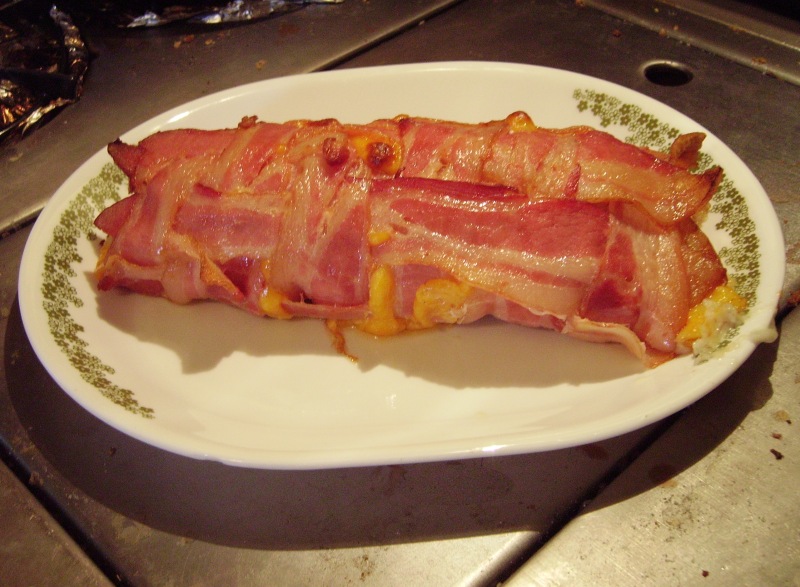
Bacon is a type of salt-cured pork made from various cuts, typically the belly or less fatty parts of the back. It is eaten as a side dish, used as a central ingredient, or as a flavouring or accent. The word is derived from the Proto-Germanic *bakkon, meaning 'back meat'.
- field
- Food
- known_for
- Salt-cured pork, breakfast side dish, ingredient in BLT sandwich
- origin
- Proto-Germanic *bakkon
- type
- Cured meat
Lore & Background
Bacon is cured through either wet curing (injecting or soaking in brine) or dry curing (rubbed with salt). Brine often includes nitrites or nitrates to speed curing and stabilize colour. Cured bacon may be dried, smoked, or boiled. Fresh and dried bacon are typically cooked before eating, often by pan frying. Boiled bacon is ready-to-eat, as is some smoked bacon, but they may be cooked further. Differing flavours can be achieved by using various types of wood, corn cobs, or peat. Bacon is distinguished from other salt-cured pork by differences in the cuts of meat used and in the brine or dry packing. Historically, the terms ham and bacon referred to different cuts that were brined or packed identically. Today, ham comes from the hind portion of the pig and its brine includes more sugar, while bacon is less sweet. Bacon is similar to salt pork, but salt pork is never smoked and has a much higher salt content. For safety, bacon may be treated to prevent trichinosis, caused by Trichinella, a parasitic roundworm which can be destroyed by heating, freezing, drying, or smoking. Sodium polyphosphates may be added to make slicing easier and reduce spattering when pan-fried.
Reader's Guide
Bacon's significance lies in its long history as a preserved meat and its continued popularity as a versatile food. Before modern refrigeration, curing was necessary for safe long-term preservation, but the flavour and extended shelf life became prized, and curing continues in wide use even though no longer necessary in the developed world. Bacon is used for barding and larding roasts, especially game, and may be layered onto meat to insulate or flavour roast joints. Meat from other animals, such as beef, lamb, chicken, goat, or turkey, may be cut, cured, or prepared to resemble bacon, and is common in areas with significant Jewish and Muslim populations. Vegetarian bacons such as soy bacon also exist. Different cuts reflect local preferences: side bacon (streaky) from the belly is most common in the United States; back bacon is typical in the United Kingdom and Ireland; pancetta is an Italian form of side bacon; and guanciale is an Italian jowl bacon. In Canada, bacon typically refers to side bacon, while Canadian-style back bacon is a lean cut. In Japan, bacon is cured and smoked belly meat, sold precooked. The term bacon in Middle English referred to all pork in general. Before the Industrial Revolution, bacon was generally produced on local farms and in domestic kitchens.
Did You Know?
- The word bacon is derived from the Proto-Germanic *bakkon, meaning 'back meat'.
- Bacon is cured through either wet curing (injecting or soaking in brine) or dry curing (rubbed with salt).
- Bacon may be treated to prevent trichinosis, caused by the parasitic roundworm Trichinella.
- In the United States, bacon cured with nitrites derived from celery or beets must be labelled 'uncured'.
The Quest to Bottle a Savory Flavor
The idea of capturing the taste of bacon in a carbonated beverage required considerable effort. Jones Soda, working alongside Seattle-based J&D's Down Home Enterprises, spent several months developing a flavor profile that would convincingly evoke bacon without using any actual meat. The resulting product is entirely vegetarian, containing just ten calories per serving. Rather than relying on real bacon, the team had to replicate the savory, smoky character through artificial means. The finished drink presents as a dark red liquid with a pronounced bacon aroma and a pronounced sweetness coming from artificial sweeteners. This engineering challenge—translating a complex, savory, fatty food flavor into a sweet, fizzy beverage—represents one of the more ambitious flavor-matching exercises in the soft drink world, demanding that a team of food scientists find a way to make salt and smoke feel at home among bubbles and sugar substitutes.
Consumer Verdicts and Marketing Ambition
Despite the months of development work, consumer reception of bacon soda has been mixed at best. A taste-test survey run by Epicurious for Jones Soda's bacon-flavored line asked panelists to rate the drink on a scale from one to ten. The results were telling: fragrance scored 2.02, flavor came in at 1.58, "bacony-ness" reached 4.57, and the overall rating landed at 1.76. In other words, while testers could detect a bacon-like quality, the drink fell well short of earning enthusiasm. Yet the companies behind these products remain confident. In November 2010, Jones Soda marketing director Mike Spear framed the venture as a natural extension of their brand, declaring it their responsibility as leaders in the premium soda space to "carbonate bacon's salty goodness." That blend of low consumer scores and high corporate conviction captures the peculiar tension at the heart of the bacon soda phenomenon, where marketing narrative clearly outruns the palate of the average drinker.
Three Companies, Three Approaches
The bacon soda landscape in the United States is shaped by at least three distinct producers, each with its own identity. Jones Soda, headquartered in Seattle, Washington, partnered with fellow Seattle company J&D's Down Home Enterprises to create a ten-calorie, vegetarian bacon drink. Lockhart Smokehouse, based in Dallas, Texas, offers its own version called Meat Maniac, which reviewers have characterized as creamy, sweet, and carrying a synthetic bacon taste; notably, no animal-derived ingredients appear on its label. Rocket Fizz, a franchise of candy shops whose flagship location sits in Camarillo, California, sells a bacon soda under the Lester's Fixins brand. By 2012, the Denver, Colorado location reported that bacon drinks had become its top-selling soft drink. Each company occupies a different niche—premium soda, barbecue-adjacent branding, and novelty candy-store fare—yet all converge on the same ambitious flavor challenge, proving that the demand for bacon in a can spans multiple retail ecosystems.
Bacon as a Flavor Universe
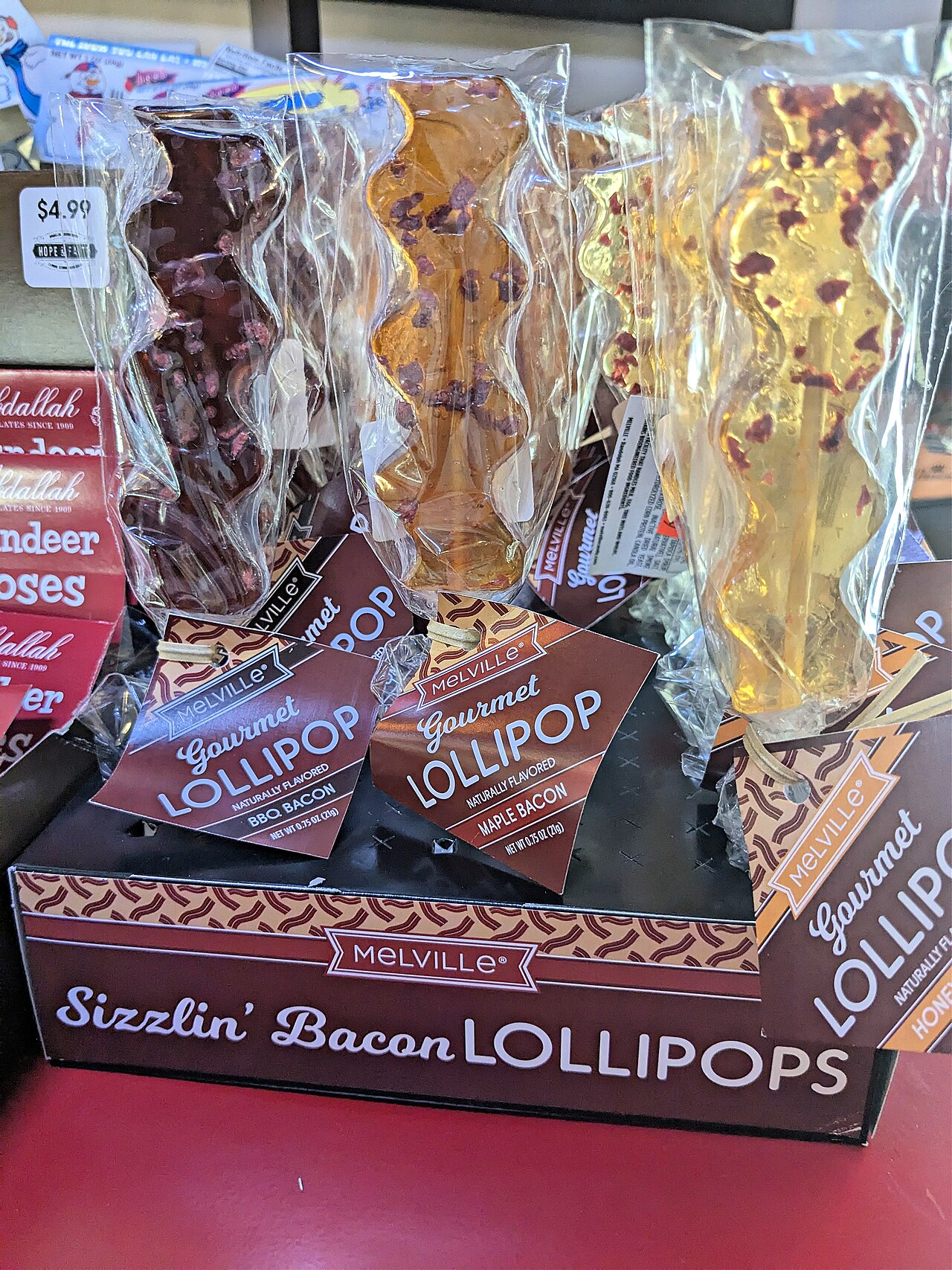
Bacon soda does not exist in isolation; it is one node in a broader commercial ecosystem built around the bacon flavor. Jones Soda, for instance, bundles its bacon drink alongside bacon-flavored lip balm, popcorn, gravy, and salt, presenting the taste as a complete lifestyle package. The company also extends its meat-flavored soda line to turkey and gravy, suggesting that savory, umami-rich profiles represent a deliberate expansion beyond traditional sweet sodas. Rocket Fizz pushes the novelty even further, offering ranch dressing-flavored, buffalo wing-flavored, and—most strikingly—dog drool-flavored drinks alongside its bacon option. The Baltimore Sun even ran a feature headlined "You asked for it -- Bacon Soda!" complete with a large photograph of the Jones Soda can. Together, these products illustrate how a single savory flavor has been stretched across beverages, snacks, and personal care items, turning bacon into a versatile branding platform far beyond the breakfast table.
Gallery
Frequently Asked Questions
What is Bacon?
Bacon is a pork product that has been preserved through salt-curing, typically sourced from the belly or the leaner sections of the back. It functions as a standalone plate item, a key component in composite dishes, or a savory accent in cooking.
Where does the word 'bacon' come from?
The term traces back to the Proto-Germanic root *bakkon, which translates to 'back meat.' This naming reflects the historical practice of curing pork taken from the rear region of the animal.
Which cuts of pork are used to make bacon?
Bacon is most commonly produced from the pork belly, though leaner portions of the back are also used. The chosen cut directly affects the final product's fat ratio and texture.
How is bacon most commonly used in everyday cooking?
It appears as a breakfast side, a central layer in sandwiches such as the BLT, or a flavoring element folded into other preparations. Its concentrated salt-and-smoke profile makes it a versatile enhancer across many cuisines.
What sets bacon apart from other cured meats?
Bacon is specifically a pork-based cure, distinguishing it from preserved meats made from other animals. Its wide range of culinary roles—from a full plate to a mere garnish—has cemented its place in kitchens around the world.
More in Food And Drink 1-24
Elsewhere in the Food And Drink universe
Spotted an error? Know more?
This is a living reference — every entry is fact-audited, and reader corrections feed straight into our audit queue. Suggest an edit · See this site's audit record