
Eggs as food
Eggs are a globally consumed food with ancient origins.

Artemas Ward · Public domain
Eggs as food have been consumed by humans and other hominids for millions of years. The most widely consumed eggs are those of fowl, especially chickens, which were domesticated from red junglefowl primarily for meat and cockfighting, with egg-laying traits developing later. Eggs are a versatile ingredient used in cooking and are important in many branches of the modern food industry.
- earliest known domestication for eggs
- a later development after initial domestication for meat and cockfighting
Lore & Background
Bird eggs have been valuable foodstuffs since prehistory. The chicken was most likely domesticated from red junglefowl native to tropical and subtropical Southeast Asia and the Indian subcontinent, but primarily for meat and cockfighting, with egg-laying traits emerging later. In ancient Rome, eggs were preserved using a number of methods and meals often started with an egg course. The Romans crushed the shells in their plates to prevent evil spirits from hiding there. The Babylonian Talmud contains a discussion about eggs, but the specific phrasing 'A soft-boiled egg is better than six logs of farina' is not a direct quote from that text.
Reader's Guide
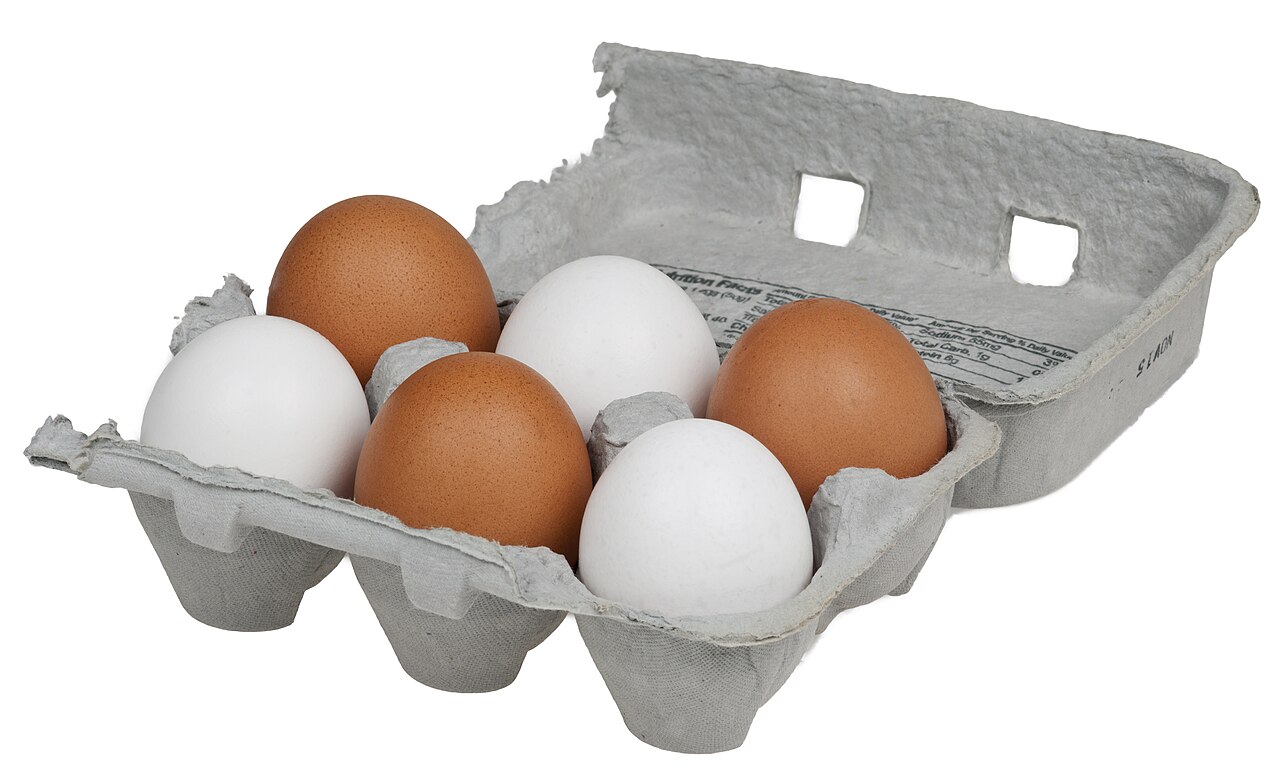
Eggs as food have a long history and remain a staple worldwide. The dried egg industry developed in the nineteenth century, and production of dried eggs significantly expanded during World War II for use by the United States Armed Forces and its allies. Early egg cartons were made of paper; polystyrene cartons became popular later, but by the twenty-first century, environmental considerations led to the return of more biodegradable paper cartons. Selective breeding has produced domesticated hens capable of laying more than three hundred eggs each annually, compared to the wild Asian fowl that lay about a dozen eggs per year. The largest egg factory in British Columbia ships 12 million eggs per week.
Did You Know?
- In ancient Rome, meals often started with an egg course, and Romans crushed eggshells to prevent evil spirits from hiding there.
- The Babylonian Talmud contains a discussion about eggs, but the specific phrasing 'A soft-boiled egg is better than six logs of farina' is not a direct quote from that text.
Religious and Cultural Frameworks Shaping Egg Consumption
Various faith traditions establish codified rules governing which foods are permissible and how they must be prepared. Judaism's kashrut system and Islam's division of foods into halal and haram categories both create structured boundaries around what adherents may eat. Jainism directs followers toward vegetarianism, while many Hindus—particularly those from upper castes—regard vegetarian practice as ideal. These religious frameworks naturally extend to animal-derived products, meaning eggs can fall outside the acceptable diet for millions of believers worldwide. Beyond formal religious law, the kapu system once enforced in Hawaii until 1819 illustrates how entire societies can codify food restrictions. In some traditions, the method of preparation matters as much as the ingredient itself; early medieval Christian penitentials even prescribed mild penance for consuming uncooked foods, and Saint Boniface once wrote to Pope Zachary asking how long bacon needed curing to be fit for the table. These layered rules demonstrate that what a person may eat is rarely a simple biological question but a deeply embedded cultural and spiritual one.
Legal Protections and Environmental Constraints
A relatively recent development in food regulation has placed the eggs of certain protected animals beyond the reach of consumers. When species such as whales, sea turtles, or migratory birds are shielded by national law or international treaty, their eggs become subject to the same prohibitions as their meat. This mirrors a broader pattern in which environmental concern translates into legal restriction: in France, the Ministry of Agriculture began safeguarding native frog species in 1976, and by 1980 mass commercial harvesting was banned outright, even though private hunting and international imports remained permissible in many regions. Sustainable seafood advisory lists and certification schemes similarly discourage consumption of certain species when fishing practices threaten long-term viability. Organic certification adds another layer by prohibiting synthetic chemical inputs, genetically modified organisms, irradiation, and the use of sewage sludge during production. Together, these overlapping regulatory frameworks mean that the simple act of eating an egg can now be constrained not only by personal or religious choice but by ecological policy and international environmental law.
Cultural Boundaries and the Disgust Response
Whether an egg is regarded as nourishment or as something to be avoided often depends less on its nutritional content than on the cultural lens through which it is viewed. Novel animal-derived foods—products unfamiliar to a given individual or community—tend to provoke a strong disgust reaction, and that visceral response frequently hardens into a cultural taboo. What is perfectly acceptable on one table can be considered deeply inappropriate on another within the same broad region. Food taboos, including those that might extend to eggs in certain contexts, usually appear intended to shield the individual from spiritual or physical harm, yet the stated reasons vary enormously from one culture to the next. An ecological or medical rationale underlies many prohibitions that are presented in religious or spiritual language. When a taboo is observed by only a subset of a community, it can inadvertently create a monopoly over a food resource by those exempted. Conversely, when an entire group or tribe embraces a shared set of dietary boundaries, those restrictions reinforce social cohesion, help the group distinguish itself from others, and generate a powerful sense of belonging that transcends the plate.
Modern Ethical Movements and Dietary Shifts
Contemporary activist movements are reshaping what many people consider an acceptable food choice, and eggs sit squarely within this evolving landscape. Veganism, in particular, calls on adherents to forgo all animal products of any kind, which places eggs firmly outside the permitted diet for its followers. Environmentalism and ethical consumerism have spawned additional guidelines that influence purchasing decisions beyond the plate: the fair trade movement discourages consumption of goods produced under exploitative working conditions, while the local food and 100-Mile Diet movements encourage abstinence from non-locally produced items. Sustainable seafood certification and advisory lists steer consumers away from species harvested through ecologically damaging methods. Organic standards go further, banning synthetic chemical inputs, genetically modified organisms, irradiation, and sewage sludge in production. These overlapping movements do not always agree on specifics, yet collectively they signal a broader cultural shift in which the decision to eat or not eat an egg is increasingly framed as a statement about labor rights, ecological stewardship, and personal ethics rather than merely a matter of taste or tradition.
Gallery



Frequently Asked Questions
What is Eggs as food?
Eggs as food refers to the edible reproductive cells of animals—most commonly those of chickens—that humans and other hominids have been consuming for millions of years. They are a globally recognized staple with deeply ancient origins.
What role do Eggs play in the food world?
Eggs serve as an extraordinarily versatile cooking ingredient and hold a significant position across multiple branches of the modern food industry. Their adaptability makes them a cornerstone of countless recipes and commercial food products worldwide.
What is the origin story behind Eggs as food?
Chickens, the primary source of most consumed eggs, were originally domesticated from red junglefowl for meat production and cockfighting. Egg-laying as a purposeful trait was a later development in the domestication timeline, not the initial reason humans kept these birds.
Why are Eggs important in the food canon?
Eggs occupy a central place in global cuisine due to their versatility, a consumption history stretching back millions of years, and their critical role in modern industrial food production. They bridge ancient foraging traditions with contemporary food science.
Which species' eggs are most central to the Eggs as food entry?
Chicken eggs are the most widely consumed, originating from birds domesticated from red junglefowl. While eggs from other species certainly exist, fowl eggs dominate the global food landscape and the broader narrative of Eggs as food.
More in Food And Drink 25-31
Elsewhere in the Food And Drink universe
Spotted an error? Know more?
This is a living reference — every entry is fact-audited, and reader corrections feed straight into our audit queue. Suggest an edit · See this site's audit record