
Dumpling
Dumplings are cooked dough dishes found worldwide with varied definitions.

Valereee · CC BY-SA 4.0
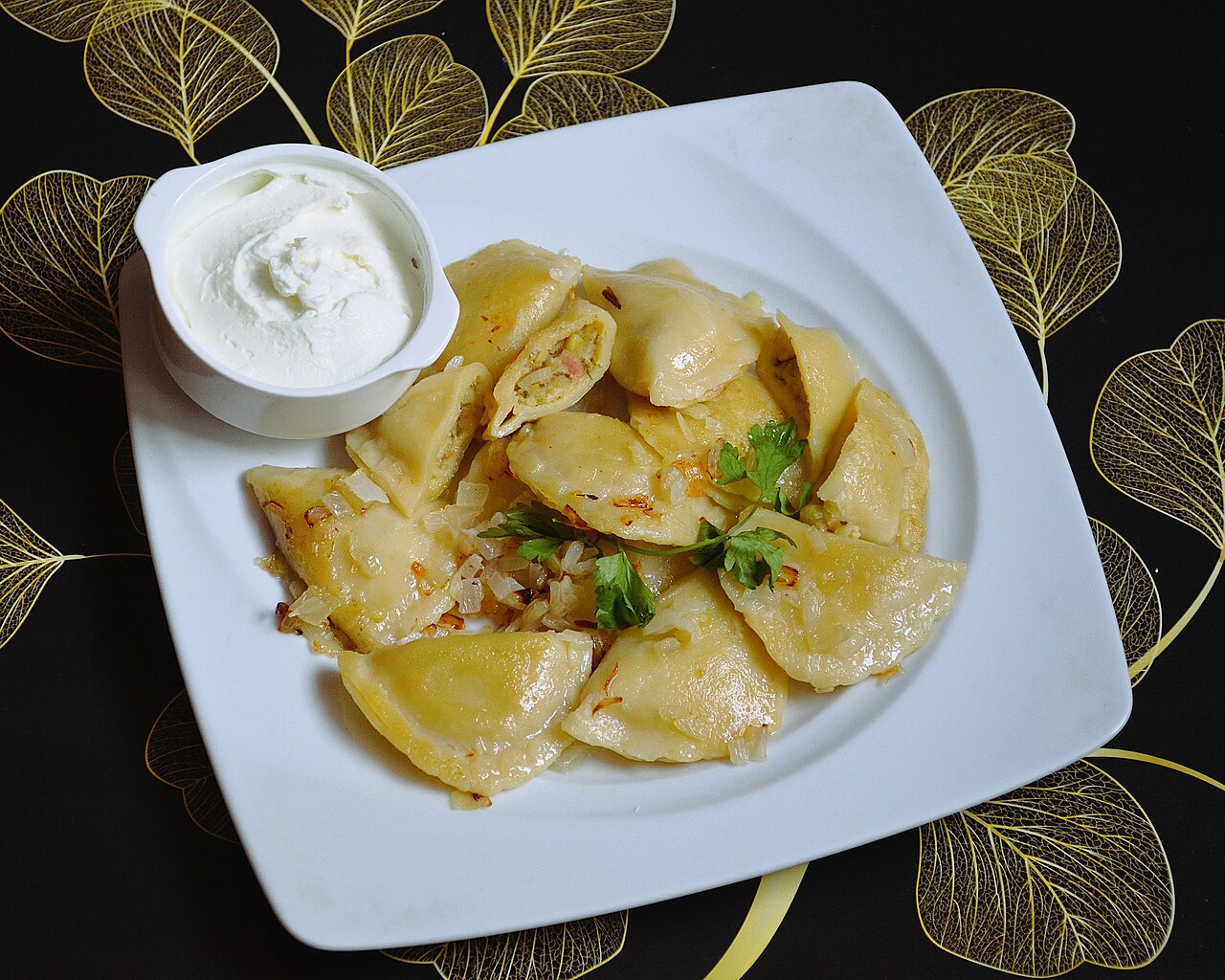
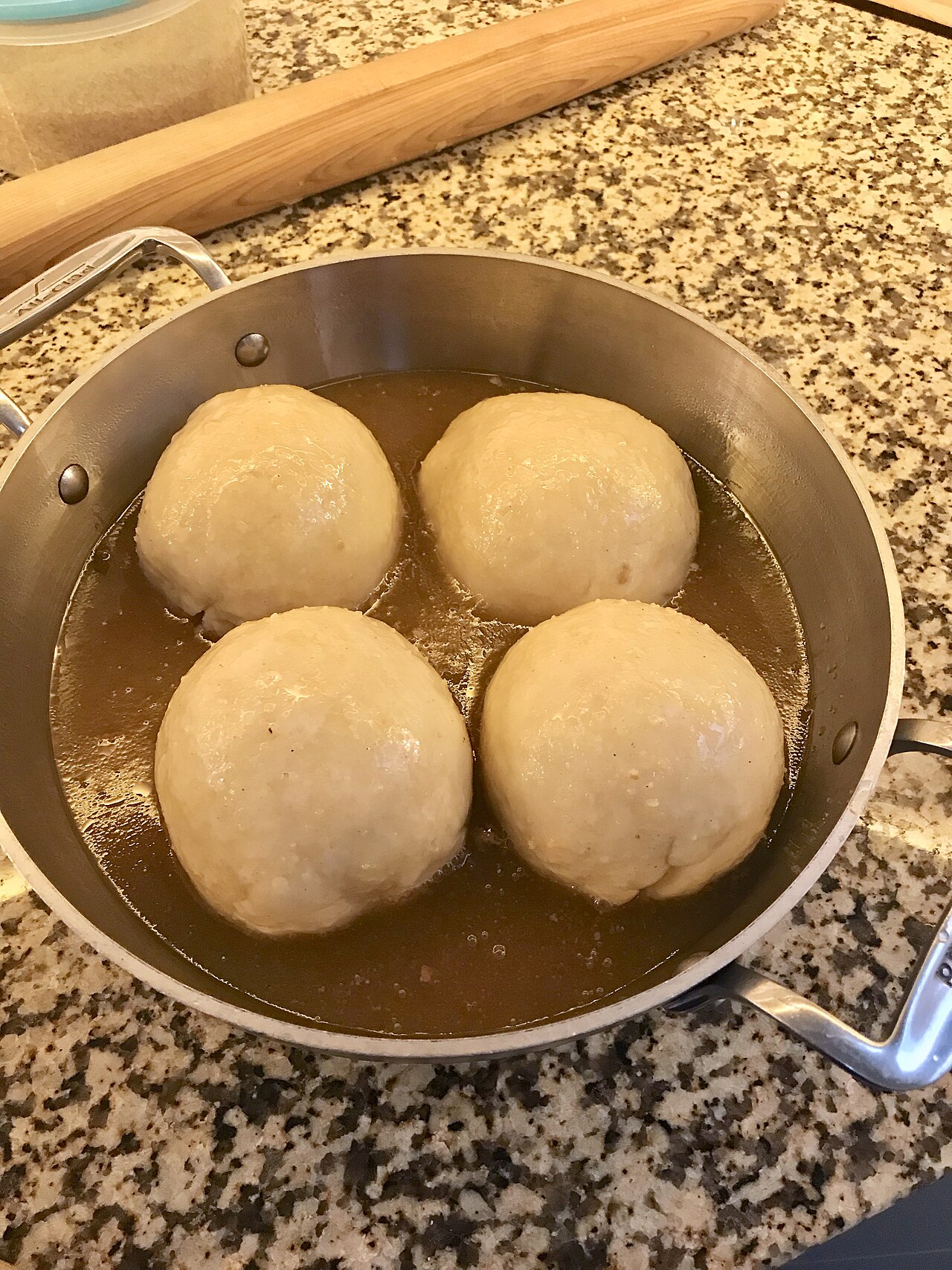
Dumplings are a broad class of dishes consisting of pieces of cooked dough, often wrapped around a filling. They are found in many world cuisines and can be prepared using a variety of cooking methods, with the precise definition varying across individuals and cultures.
- term_origin
- English term emerged by the 17th century
- common_dough_bases
- Bread, wheat or other flours, or potatoes
- common_fillings
- Meat, fish, tofu, cheese, vegetables, or a combination
- cooking_methods
- Boiling, simmering, steaming, occasionally baking or frying
Lore & Background
The term 'dumpling' emerged in English by the 17th century, where it referred to a small lump of dough cooked by simmering or steaming, and has since grown to include filled dumplings.
Reader's Guide
Dumplings are significant as a global culinary category, appearing in diverse forms across Africa, the Caribbean, Latin America, and beyond. Their definition remains controversial, varying across individuals and cultures, with some definitions ruling out baking and frying to exclude items like fritters. In Africa, examples include banku and kenkey from West Africa, tihlo from Ethiopia, and souskluitjies from South Africa. In the Caribbean and Latin America, variations include empanadas, pastéis in Brazil, pantrucas in Chile, and pupusas in El Salvador. The variety of doughs, fillings, and cooking methods reflects local ingredients and traditions, making dumplings a versatile and enduring element of world cuisines.
Did You Know?
- The term 'dumpling' emerged in English by the 17th century, referring to a small lump of dough cooked by simmering or steaming.
- In Jamaica, dumplings come in three forms: fried, boiled, and roasted.
Etymological Roots: From Mantou to Manti
The word 'manti' traces back to the Chinese term mantou, which appears in records from the Jin dynasty (266–420 CE). In those early days, mantou referred to a meat-filled bun, a meaning still preserved in Wu Chinese as 'moedeu.' Over time, Mandarin and other Chinese varieties shifted the term to describe plain steamed buns, while the stuffed version became baozi. The characters tou and shou both carry the meaning of 'head' in Chinese, hinting at the round, head-like shape of the original preparation. The dish's name is cognate with Korean mandu, Japanese manjū, and Uyghur manta, though modern Chinese and Japanese counterparts now mostly point to different dishes entirely. This etymological web reveals a shared culinary ancestor that has since diverged into distinct traditions across East and Central Asia.
The Silk Road Migration
The migration of manti across continents is one of culinary history's most compelling narratives. During the Mongol Empire, Turkic and Mongol horsemen reportedly carried frozen or dried manti on their travels, able to quickly boil them over a campfire. This practical, portable food traveled the Silk Road from Central Asia into Anatolia, where it evolved into the Turkish mantı. The earliest written Ottoman recipe appears in a 15th-century cookbook by Muhammed bin Mahmud Shirvani, describing a steamed dumpling with minced lamb, crushed chickpeas, cinnamon, and vinegar, garnished with sumac and served with garlic-yoghurt sauce. Korean mandu is believed to have arrived through Mongol influence in the 14th century. Yet some scholars argue the origin may have run the opposite direction, with the dish spreading eastward from the Middle East through the Silk Road into China and Korea. The 1330 manuscript Yinshan Zhengyao by Hu Sihui, a Chinese court therapist serving the Yuan Dynasty, contains one of the earliest mentions of a Turkic manti-like dish.
A Continent of Variations
The preparation of manti shifts dramatically depending on where you find it. In Central Asian kitchens, the dumplings are notably larger and cooked in a multi-level metal steamer known as a mantovarka or manti-kazan, consisting of layered perforated pans stacked over a pot of water. Kazakh and Kyrgyz versions typically feature minced lamb or beef seasoned with black pepper, sometimes with chopped pumpkin or squash, and are topped with butter, sour cream, or onion sauce. Street vendors in Kazakhstan and Kyrgyzstan often dust them with hot red pepper powder. Uzbek and Tajik manti incorporate cabbage, potato, or pumpkin alongside meat, and Bukharian Jewish traditions introduce cheese fillings served with yogurt. In Afghanistan, mantu is steamed then crowned with a garlic-yoghurt sauce called seer mosst, made from thick strained yogurt, lemon juice, mint, chili, and pressed garlic, or alternatively with a tomato-based sauce containing split peas or sautéed meat. In Turkey, the earliest printed recipe in Melceüt't Tabâhhin (1844) actually lists a similar dish under the name Tatar böreği rather than mantı.
One Name, Many Identities
The name 'manti' carries a fascinating linguistic duality. Depending on the language in question, the word can refer to a single dumpling or to a collection of them simultaneously. In English usage, it functions as both singular and plural, a flexibility that mirrors how the dish itself resists a single fixed identity. The term is cognate with Chinese mantou, Korean mandu, and Japanese manjū, yet in modern Mandarin and Japanese, these cognates have drifted to describe largely different preparations. In Russian, the dish appeared in culinary records by the early 17th century, though it was largely forgotten until Soviet-era Central Asian cuisine reintroduced it to wider Russian tables. In Uzbekistan, manti also goes by the name kaskoni. The dish's presence across Uyghur, Turkish, Tatar, Bashkir, Afghan, and post-Soviet cuisines makes it a rare example of a single food concept that has been adopted, adapted, and re-imagined across dozens of distinct culinary traditions while retaining a recognizable core identity.
Gallery
Frequently Asked Questions
What exactly is a dumpling?
A dumpling is a broad category of dish built around cooked dough, typically shaped into small pieces and wrapped around a filling. The exact definition shifts depending on the culture and even the individual cook, so there is no single universal standard.
What goes inside a dumpling?
Fillings range widely: meat, fish, tofu, cheese, vegetables, or some mix of those. The dough wrapper itself can be made from bread, wheat or other flours, or even potatoes.
How do you cook dumplings?
The most common techniques are boiling, simmering, and steaming. Baking and frying are used less frequently but do appear in certain regional traditions.
When did the English word 'dumpling' show up?
The term entered English vocabulary by the 17th century. Before that, the concept existed across many cuisines without a single shared English label.
More in Food And Drink 25-31
Elsewhere in the Food And Drink universe
Spotted an error? Know more?
This is a living reference — every entry is fact-audited, and reader corrections feed straight into our audit queue. Suggest an edit · See this site's audit record