
Eating
Ingestion of food for nutrition, energy, and survival.

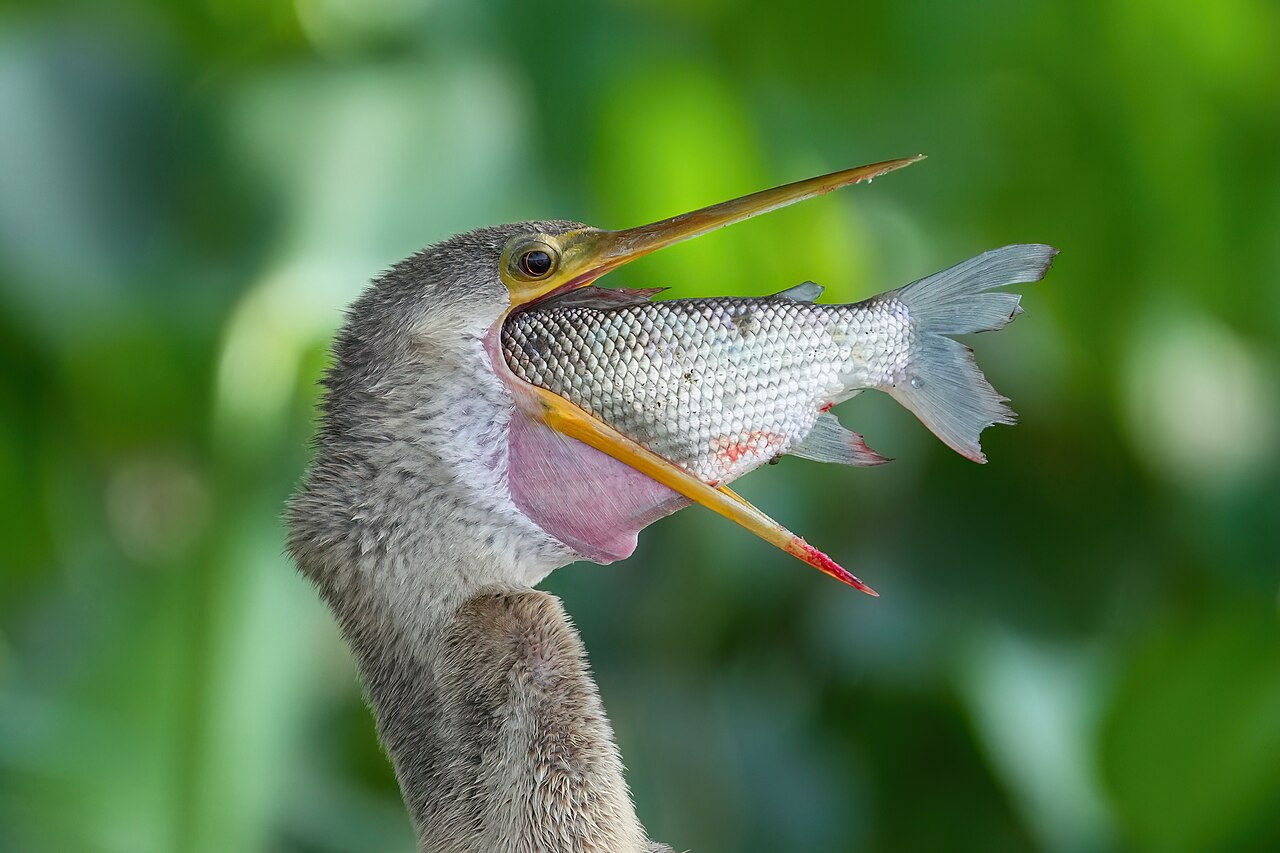
Giles Laurent · CC BY-SA 4.0
Eating, also known as feeding or consuming, is the ingestion of food for digestion. In biology, it is typically done to provide heterotrophic organisms with essential nutrients and energy, as they cannot acquire nutrition intrinsically like autotrophs. For humans, eating is a complex activity of daily living, often organized into meals and snacks, and influenced by culture, health, and social contexts.
- Cultural variations
- Eating positions vary by region; Sharia law mandates fasting during Ramadan daylight hours, meaning eating is prohibited only during that specific time.
Lore & Background
Eating in humans is typically organized into routine sessions called meals, where cooked food with staples is consumed, and snacks, which are smaller, flexible eatings of non-staple foods. Formal eating events include dining, banquets, and feasts. The craft of preparing meals is culinary arts, performed by cooks, chefs, or caterers. Many homes have kitchens and dining areas, and societies have restaurants and food vendors for eating away from home.
Reader's Guide
Eating is fundamental to human life and culture. It provides essential nutrients and energy, and its organization into meals and snacks reflects social and biological rhythms. Physicians and dieticians emphasize a healthy diet for physical condition, while overeating can lead to obesity and related health problems, termed an 'obesity epidemic' in developed regions. Eating practices vary globally, from sitting on the floor in Middle Eastern countries to reclining in ancient traditions. Developmentally, humans progress from liquid diets to solid foods by 18 months. The control of eating involves physiological mechanisms like ghrelin for hunger and various hormones for satiety. Understanding eating is crucial for addressing health issues such as undernutrition, overnutrition, and emotional eating.
Did You Know?
- Animals and phagotrophs eat and digest food internally, unlike decomposers such as fungi and microbes.
- Eating rapidly leads to obesity and overeating, probably because feelings of satiety can be slower.
- Ghrelin is a hormone that increases appetite by signaling to the brain that a person is hungry.
From Dog Food Ads to Corporate Jargon
The phrase "eating your own dog food" traces its roots to mid-twentieth-century advertising. In the 1970s, actor Lorne Greene appeared in television commercials for Alpo, pointing out that he fed the brand to his own dogs. A separate anecdote recalled by Warren Harrison, then Editor-in-Chief of IEEE Software, involved the president of Kal Kan Pet Food reportedly consuming a can of his company's product during annual shareholders' meetings. The term leapt into the technology world in 1988, when Microsoft manager Paul Maritz sent an email to test manager Brian Valentine titled "Eating our own Dogfood," urging him to boost internal adoption of Microsoft LAN Manager. The expression quickly permeated the company's culture. The connection to pet food branding resurfaced in 1999, when Hewlett-Packard staff dubbed an internal initiative "Project Alpo," and Mozilla independently adopted the same name for its own practice of using its software internally.
A Layered Testing Philosophy
Dogfooding in software development is not a single event but a staged process designed to catch problems before public release. In one common approach, a stable build receives a single new feature for internal use; in a later stage, multiple features are bundled together and tested as a combined unit. This layered validation helps surface inconsistencies and dependency conflicts that emerge when several teams or developers work on the same codebase simultaneously. InfoWorld emphasized that genuine dogfooding must be a transparent, honest exercise focused on the functional performance of the product. The publication drew a sharp line between true internal testing and mere corporate loyalty gestures, such as auto dealers requiring salespeople to drive their own brands or Coca-Cola banning Pepsi from its offices. Those watered-down examples, InfoWorld argued, miss the point entirely. The real value lies in giving management an unfiltered sense of how the product behaves in daily use, well before it reaches paying customers.
Corporate Showcases and Public Proof
Several landmark corporate episodes illustrate dogfooding at scale. In February 1980, Apple president Michael Scott issued a memo declaring the typewriter obsolete and set a deadline of January 1, 1981, to eliminate all typewriters from the company. By 1987, Atari was rolling out the Atari ST across its operations. At Microsoft, Dave Cutler's 1991 insistence on dogfooding during Windows NT development meant over 200 developers in small teams ran daily NT builds on their own machines, enduring crashes and broken builds as powerful motivators to fix issues. The company's internal email system initially ran on Xenix, but the 1993–1996 migration to Microsoft Exchange—codenamed "Dogfood"—was stress-tested by the 1997 Bedlam DL3 email storm, which forced the team to build more robust features. By 2005, InfoWorld reported Microsoft ran its 20,000-plus-node international network on 99 percent Windows technology. Oracle, in 2016, stated it operated over 42,000 servers on Oracle Linux supporting more than four million external users.
Blind Spots and Backlash
Despite its appeal, dogfooding carries well-documented limitations. Developers who design a product may possess deep knowledge of workarounds and internal logic that a typical end user simply does not have, making them poor proxies for the general public. Microsoft's chief information officer acknowledged in 2008 that the company had historically skipped the actual customer experience, always upgrading from a beta rather than from one production disk to the next. There is also the risk that internal testing happens too early in the development cycle to be meaningful, or that employees grow accustomed to workarounds and assume a colleague has already flagged a given bug. Public dogfooding introduces its own vulnerability: if a company struggles to use its own product, the embarrassment can deter further publicized testing. After the CrowdStrike outages of July 2024, CEO Adam Meyers testified before the US Congress that increased internal testing before deployment was among the corrective measures adopted, underscoring that even large firms can fall short of the ideal.
Gallery





Frequently Asked Questions
What is Eating in the context of Food and Drink 25-31?
Eating refers to the act of ingesting food so it can be broken down and absorbed by the body. It is the fundamental process by which organisms obtain the nutrients and energy they need to survive.
Why do heterotrophic organisms rely on Eating?
Heterotrophs cannot synthesize their own nutrition the way autotrophs do, so they must consume external food sources. Eating is therefore their primary mechanism for acquiring essential nutrients and usable energy.
How is Eating structured in everyday human life?
Humans typically organize eating into distinct meals and snacks rather than consuming food continuously. Cultural norms, health considerations, and social settings all shape when, where, and how people eat.
Are there religious or cultural rules that restrict Eating?
Yes; for example, Sharia law requires Muslims to abstain from all food and drink during daylight hours of Ramadan. Eating positions and table customs also differ significantly from one region to another.
What makes Eating a 'complex activity of daily living' for humans?
Beyond the biological act of swallowing and digesting, eating involves planning, preparation, social interaction, and cultural meaning. It is shaped by health status, available resources, and the traditions a person belongs to.
More in Food And Drink 25-31
Elsewhere in the Food And Drink universe
Spotted an error? Know more?
This is a living reference — every entry is fact-audited, and reader corrections feed straight into our audit queue. Suggest an edit · See this site's audit record