
Flour
Powder made by grinding grains, nuts, seeds, roots, or vegetables.
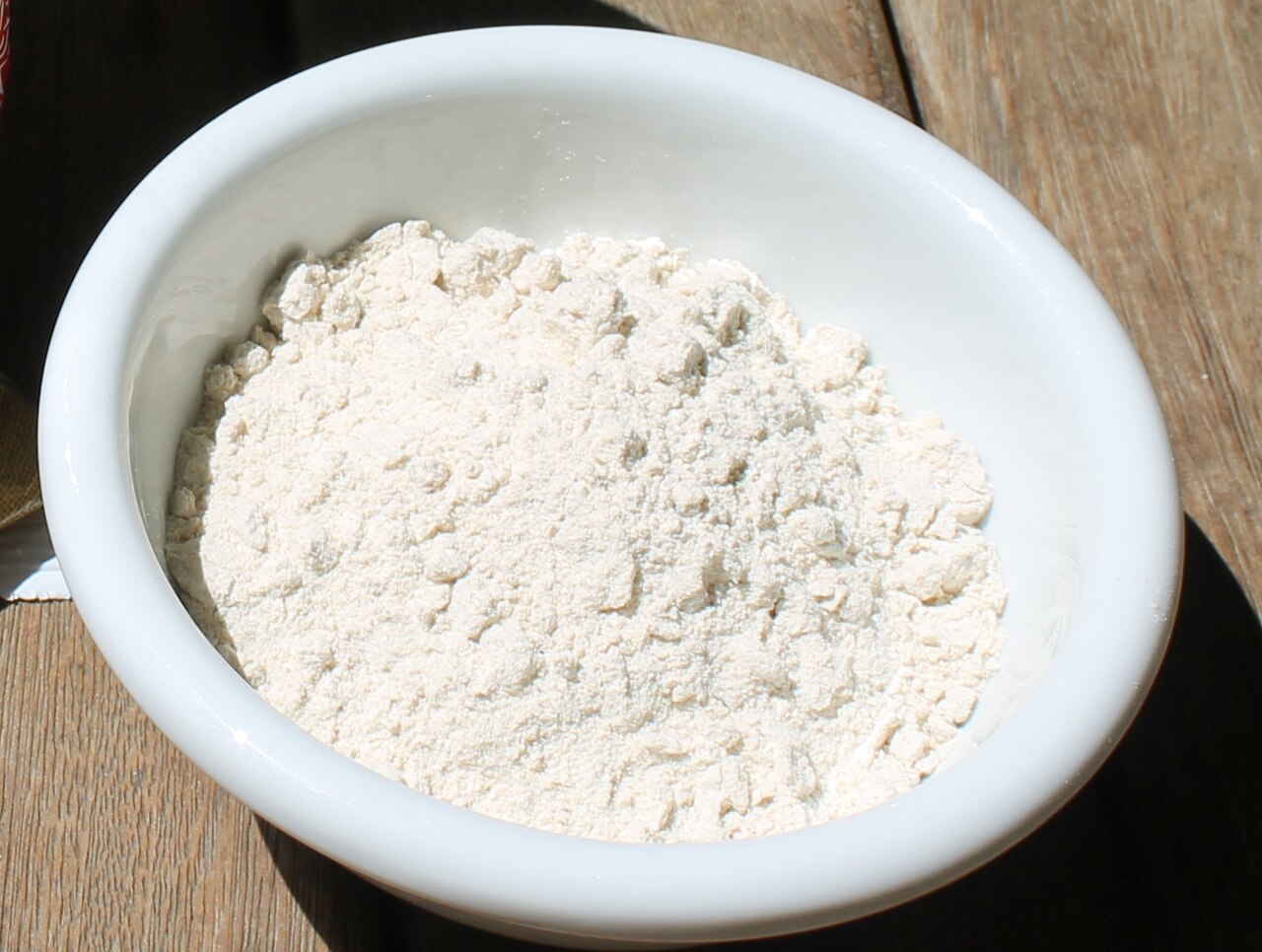
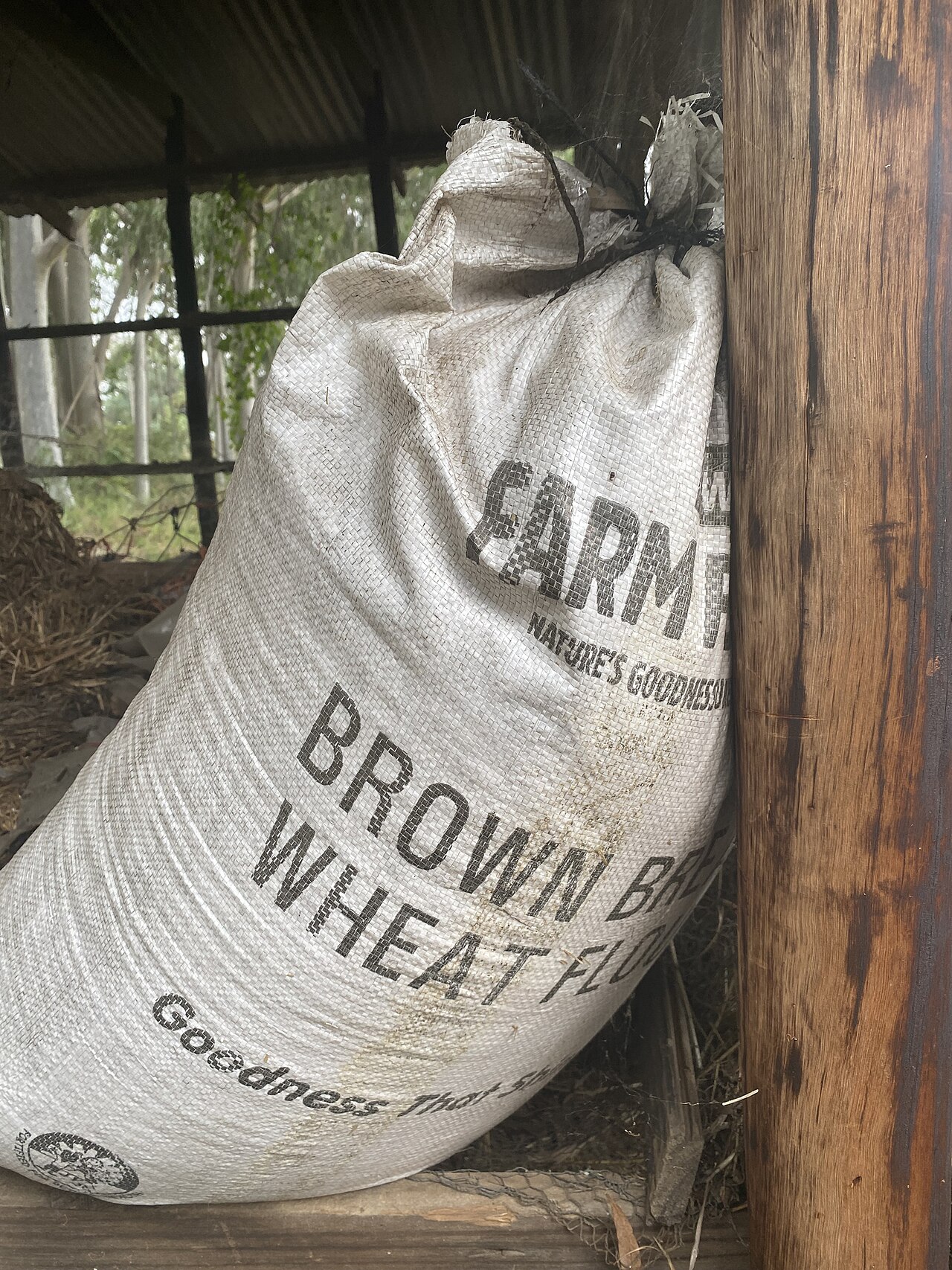
Flour is a finely ground powder produced by milling a wide range of ingredients—grains, beans, nuts, seeds, roots, or vegetables—and is used to make foods like baked goods or to thicken sauces and stews. Among the most common types is cereal flour, especially wheat flour, which serves as the primary component of bread, a dietary staple across many cultures.
Archaeological evidence shows that humans have been grinding cereal flour for over 32,000 years. Corn flour, for instance, has been central to Mesoamerican cooking since ancient times and remains a key ingredient in the Americas. Rye flour is a standard part of bread in Central and Northern Europe. Cereal flour can be whole-grain, containing the endosperm, germ, and bran, or refined, made only from the endosperm. The term "meal" technically refers to a coarser grind, though in some regions it is used interchangeably with "flour." When cereal flour is refined to produce white flour, the removal of the outer layers strips away nutrients. To compensate, many countries—86 as of 2016—legally require that wheat flour be fortified with added nutrients.
Nut flour is made by grinding blanched nuts, except for walnut flour, where the oil is extracted first. It is a popular gluten-free option, especially in keto and paleo diets, and retains all the nutritional benefits of the nuts. Nut flour has a long history in Mediterranean and Persian cooking.
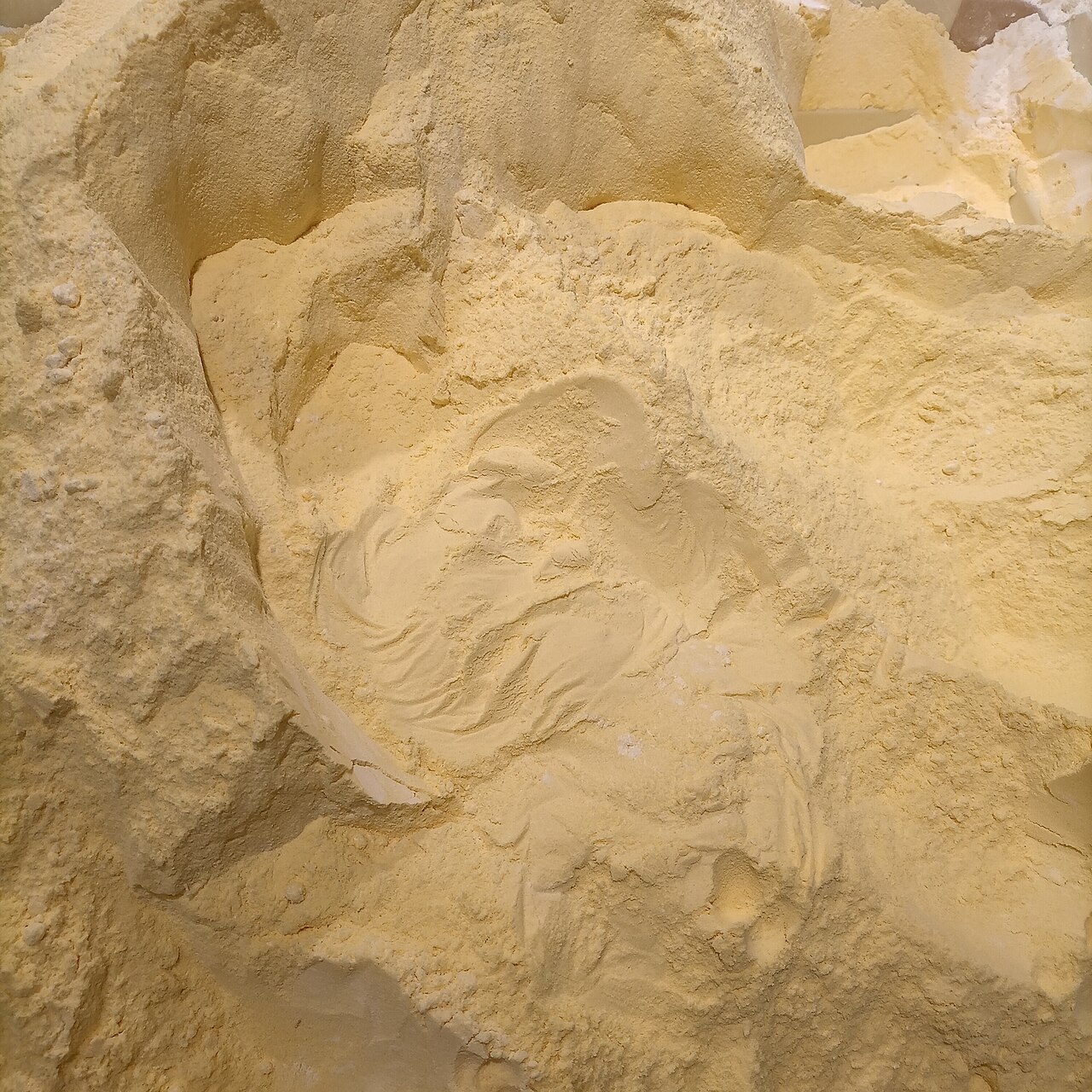
Bean flours come from dried or roasted beans. Chickpea flour (also called gram flour or besan) is made from dried chickpeas and is traditional in Mediterranean, Middle Eastern, and Indian cuisines. Soybean flour involves soaking and dehulling the beans, then drying or roasting them (the roasted version is known as kinako) before grinding; to be labeled soya flour, at least 97% of the product must pass through a 100-mesh screen. It is widely used in Asian cooking.
Seed flours include teff, which is traditional in Ethiopia and Eritrea for making flatbread and sourdough, and buckwheat, used historically in Russia, Japan, and Italy. In Australia, grindstones for seeds have been found dating back to the Pleistocene period.
Root flours include arrowroot and cassava. Arrowroot flour, also called arrowroot powder, is a thickener for sauces, soups, and pies, with twice the thickening power of wheat flour. Cassava flour is gluten-free and serves as a wheat flour alternative, traditionally used in African, South and Central American, and Caribbean foods.
Vegetable flour is made by dehydrating vegetables—such as broccoli, spinach, squash, or green peas—and then milling them. These flours are rich in fiber and gluten-free. Researchers have studied whether adding vegetable flour to wheat-flour bread could serve as an alternative enrichment method.
The word "flour" originally came from the word "flower," both derived from Old French *fleur* or *flour*, meaning "blossom" and, figuratively, "the finest." The phrase *fleur de farine* referred to the finest part of the flour, which was the result of removing coarse and unwanted material during milling.
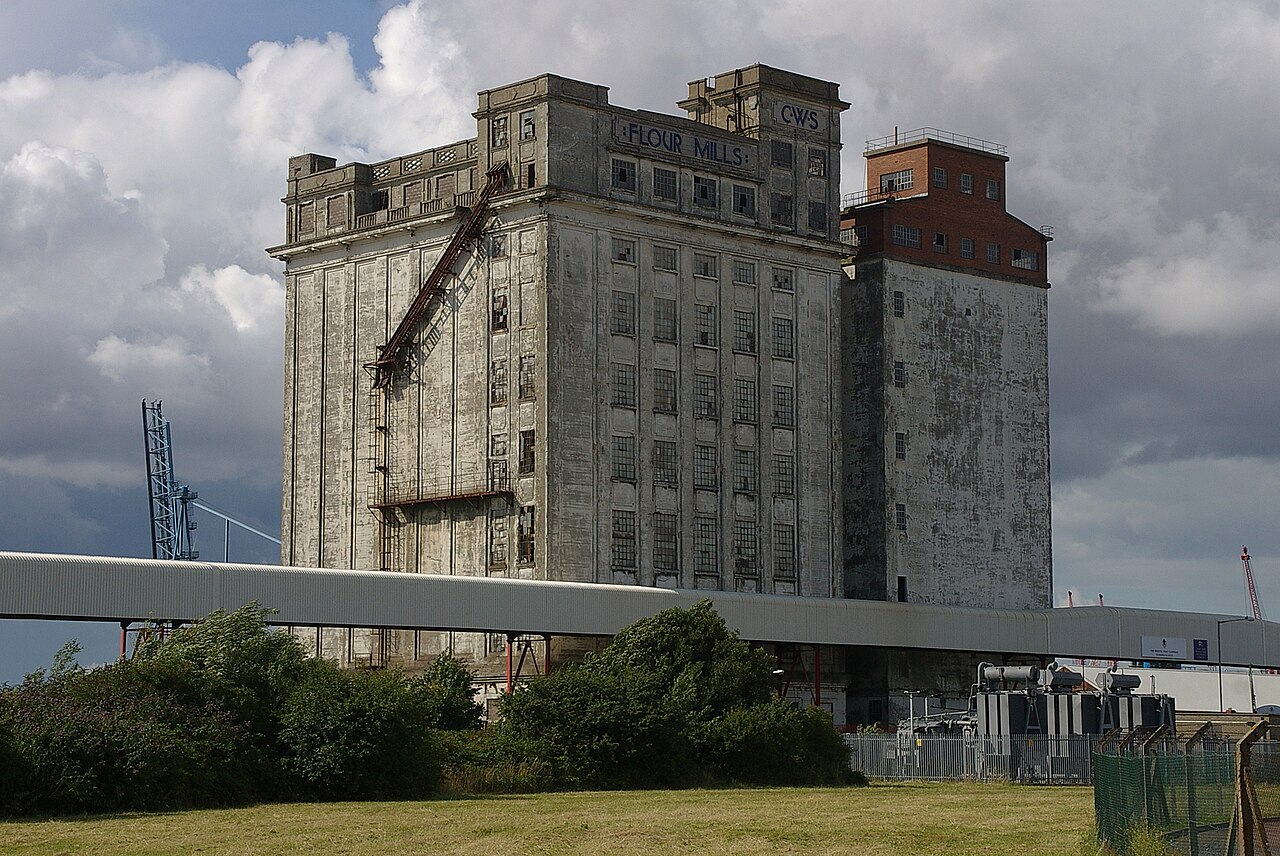
Historically, maize flour has been a staple in the Americas since ancient times, while rye flour is central to bread in Central and Northern Europe. Evidence of wheat flour production dates to at least 6000 BC. In Australia, Pleistocene-era grindstones have been found. In 2018, archaeologists discovered evidence of bread making at a Natufian site in Jordan over 14,000 years old. The Romans were the first to use cone mills for grinding cereals. The first steam-powered flour mill, Albion Mills in London, was completed in 1786. In the 1930s, flour began to be enriched with iron, niacin, thiamine, and riboflavin; by the 1940s, enrichment became common, and folic acid was added in the 1990s.
During the Industrial Revolution, preserving flour became a challenge due to long transportation distances and slow distribution. The germ’s fatty acids oxidize when exposed to oxygen during milling, causing flour to go rancid within six to nine months. Since vitamins and micronutrients were largely unknown in the late 19th century, removing the germ solved the problem—degermed flour does not spoil. This practice started in densely populated areas and spread to the countryside over about a generation. Heat-processed flour involves separating the germ, treating it with steam, dry heat, or microwaves, and then blending it back into the flour.
Flour is milled by grinding grain between stones or steel wheels. "Stone-ground" today typically means a mill where a revolving stone wheel turns over a stationary one, with grain between them. Roller mills replaced stone grist mills in the 19th century.
- main_ingredient_for
- bread
- common_types
- cereal, nut, bean, seed, root, vegetable
- key_processing_methods
- stone grinding, roller milling, degerming, bleaching
Lore & Background
Flour is a finely ground powder produced by milling grains, beans, nuts, seeds, roots, or vegetables. Its primary use is in food preparation, serving as a foundational ingredient for baked goods and as a thickening agent for sauces and other dishes. The defining characteristic of flour is its particle size; technically, "meal" refers to a coarser grind, though the terms are used synonymously in some regions. Cereal flour, especially from wheat, is the central component of bread, a global staple. The endosperm alone yields refined white flour, while whole-grain flour retains the endosperm, germ, and bran. Removing the bran and germ during refining strips nutrients, leading to the common practice of fortifying white flour with added vitamins and minerals—a legal requirement in 86 countries as of 2016. Nut flours, such as almond, are made from blanched nuts (walnut flour requires oil extraction first) and are popular gluten-free alternatives in modern diets, retaining all nutritional benefits. Bean flours, like chickpea (gram flour) and soybean, are produced from dried or roasted legumes and are traditional in Mediterranean, Middle Eastern, Indian, and Asian cuisines. Seed flours, including teff and buckwheat, have deep roots in Ethiopian, Eritrean, Russian, Japanese, and Italian cooking. Root flours, such as arrowroot and cassava, are valued for their thickening power and gluten-free properties, with cassava being a staple in African, South American, and Caribbean foods. Vegetable flours, made from dehydrated vegetables like broccoli or squash, are rich in fiber and gluten-free, and have been studied as enrichment additives for wheat bread. The English word "flour" derives from the Old French "fleur" (flower), originally meaning "the finest part," as it referred to the finest portion of milled grain.
Reader's Guide
Its production has driven technological development, from watermills and windmills to steam-powered mills and roller mills. The composition of flour—whether whole-grain or refined—affects its nutritional value and culinary properties. Refined flour loses nutrients when the germ and bran are removed, leading to fortification practices now legally required in 86 countries. Nut, bean, seed, root, and vegetable flours offer gluten-free alternatives and have traditional uses in various cuisines. The etymology of the word 'flour' derives from the Old French for 'blossom,' reflecting the finest part of the grain. The industrial era introduced degermed flour to extend shelf life, and bleaching agents to alter color and gluten development, though some are banned in certain regions.
Did You Know?
- The English word 'flour' is originally a variant of the word 'flower,' both deriving from Old French 'fleur' or 'flour,' meaning 'blossom' and figuratively 'the finest.'
- Nut flour is a popular gluten-free alternative used within the 'keto' and 'paleo' diets, and none of the nuts' nutritional benefits are lost during grinding.
- The Romans were the first to grind cereals on cone mills.
From Farmstead to Fine Dining
Northern Irish cooking grew out of the practical needs of rural farming communities, where bread and potatoes formed the backbone of daily meals for generations. For much of its history, the region's culinary scene was shaped by scarcity: a limited range of available ingredients and minimal immigration meant that local kitchens remained relatively insulated from broader international food trends. This isolation, while restrictive, also allowed a distinct regional identity to develop, one that borrows from both Irish and British traditions while maintaining its own character. The landscape of Northern Irish food has transformed dramatically in recent decades. The number of gastropubs and restaurants has expanded considerably, bringing greater variety, volume, and refinement to the local dining scene. At the pinnacle of this evolution sit two Michelin-starred establishments, both of which dedicate their menus to traditional preparations built around locally sourced ingredients—a testament to how the region's heritage and its modern ambition now coexist.
A Bread Culture of Its Own
Bread occupies a central place in Northern Irish food culture, with a remarkable diversity of loaves and flatbreads each carrying their own history. Potato bread, also called fadge or tatie bread, is a simple griddle-cooked flatbread made from potato, flour, and buttermilk. Soda bread, first baked in Ireland during the 1800s using baking soda as a leavener, is a soft, thick, and fluffy griddle bread that is a staple of the Ulster fry. Wheaten bread offers a sweeter, whole-wheat counterpart, while Veda bread is a small, malted, caramel-coloured loaf traditionally enjoyed toasted alongside a cup of tea. The Belfast bap is a large, crusty-yet-soft roll typically stuffed with sausages, bacon, and egg. Barmbrack, a yeast-raised bread studded with sultanas and raisins and often flavoured with whiskey, is closely tied to Halloween celebrations. In Ulster Presbyterian communities, unique sandwich pairings such as grape and cheese or apple and Mars Bar are traditionally served at funerals, reflecting how bread and its accompaniments are woven into both everyday life and ceremonial occasions.
The Ulster Fry and Savoury Traditions
The Ulster fry stands as Northern Ireland's most recognised traditional dish. Though it was not originally tied to breakfast, it has been marketed in recent decades as the region's answer to a cooked breakfast. What sets it apart is its griddle breads—soda bread and potato bread fried or grilled until crisp and golden—alongside bacon, sausages, an egg, and in more modern iterations, tomato and mushrooms, all typically accompanied by tea and toast. Beyond the fry, the savoury repertoire is rich and varied. Boxty, a dense potato cake from County Fermanagh made from an equal mix of cooked mash and grated raw potato, is boiled whole for hours before being sliced and fried with bacon. Ardgliss potted herring, marinated in vinegar and baked with breadcrumbs, is a local butchers' speciality. Black and white puddings—blood sausages and their pork-and-oatmeal counterpart—can be battered and deep-fried at chip shops. The region's long coastline and large loughs supply abundant seafood, including smoked salmon and Irish oysters, with Royal Hillsborough hosting an annual oyster festival. Tobacco onions, thinly sliced and coated in seasoned flour before deep-frying to a golden crisp, round out the savoury offerings.
Sweets, Cheeses, and Regional Flavours
Northern Ireland's confectionery and dairy traditions reveal a region with a strong sweet tooth and a proud local identity. Fifteens, a soft tray-baked cake, derives its name from the use of fifteen of each main ingredient—marshmallows, digestive biscuits, and cherries. The gravy ring, a dark, slightly crunchy doughnut dusted in sugar, takes its name from the archaic Ulster use of "gravy" to mean cooking oil. Paris buns, an Ulster-Scots specialty, are cone-shaped, sweetened, bread-like cakes topped with pearl sugar. Florence cake is a Madeira-style confection covered in glace icing with a cherry on top, set in a pastry case spread with raspberry jam. Cream horns are horn-shaped puff pastries filled with sweetened cream, while Yellowman, a crunchy golden treat resembling honeycomb, is a staple of local sweetshops and fairs. On the dairy front, the region produces a range of distinctive cheeses including Blue Rathgore, Boilie, Causeway Cheese, Coleraine Cheddar, and Dart Mountain Cheese. Accompaniments like black butter—a dark, spicy spread made from apples, cider, and spices including liquorice—add another layer of local flavour. Bushmills whiskey and Brown lemonade complete the beverage picture.
Gallery

Frequently Asked Questions
What is Flour?
Flour is a fine powder produced by grinding plant materials such as grains, nuts, seeds, roots, or vegetables through a mill. It serves as a foundational ingredient across countless recipes worldwide.
What is Flour's main role in the kitchen?
Wheat flour, in particular, is the primary ingredient in bread, which remains a staple food in many cultures. Beyond baking, it is also widely used to thicken soups, sauces, and other dishes.
What types of Flour exist?
Beyond the familiar cereal varieties, flour can be made from nuts, beans, seeds, roots, and vegetables, giving bakers and cooks a wide range of textures and flavors to work with.
More in Food And Drink 1-24
Spotted an error? Know more?
This is a living reference — every entry is fact-audited, and reader corrections feed straight into our audit queue. Suggest an edit · See this site's audit record